Is spain in europe – Complete Guide (2026)

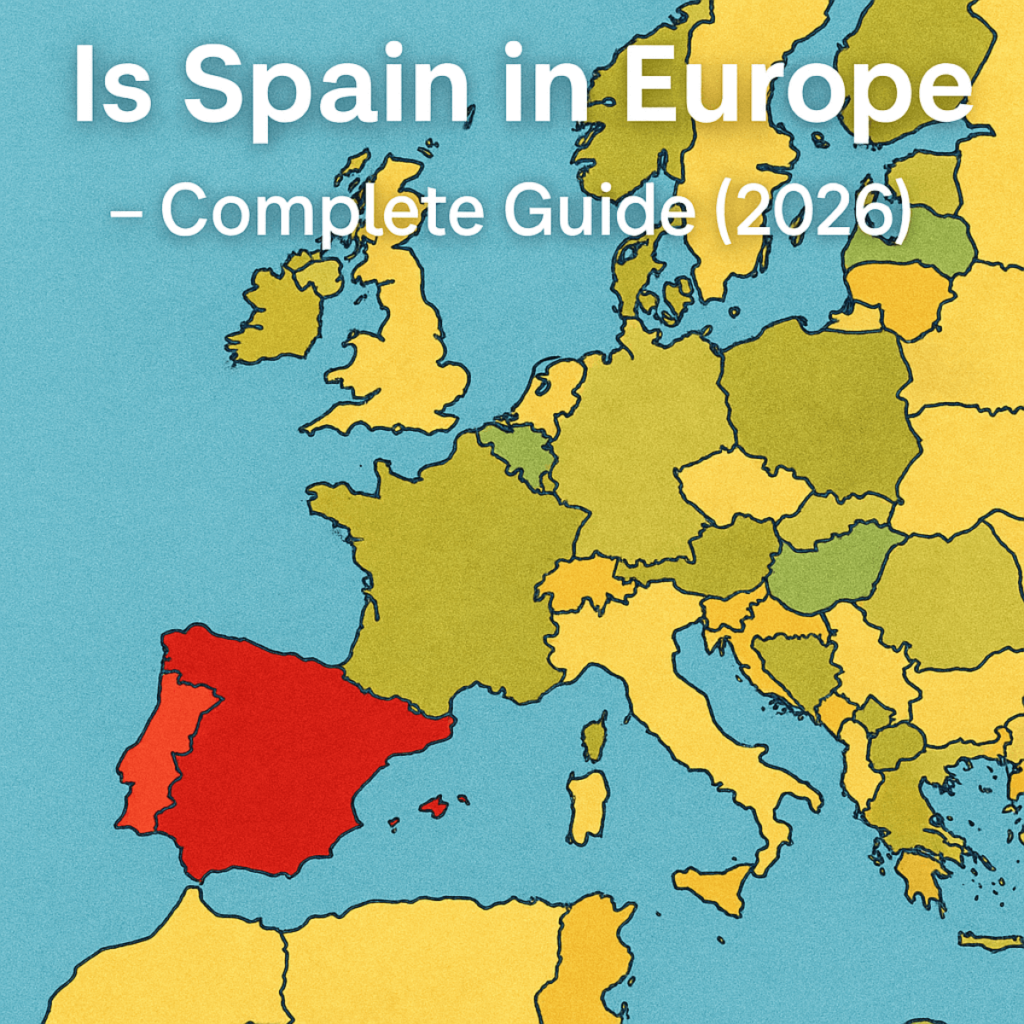
Spain is one of the most fascinating countries in the world — rich in culture, history, and traditions. Many travelers still ask, “Is Spain in Europe?”, especially when planning a trip.
The short answer is yes: Spain is a European country located in the southwest of the continent, known for its Mediterranean climate, passionate culture, and world-famous attractions such as Madrid, Barcelona, and Seville.
This complete 2026 guide explains Spain’s geography, political position, culture, and why it stands as one of Europe’s top tourist destinations.
You’ll also find tips for travelers, insights into local traditions like bullfighting in Madrid, and advice for planning the perfect trip.
Where Is Spain Located in Europe
Spain is located on the Iberian Peninsula, in southwestern Europe. It shares borders with France, Portugal, and Andorra, and connects to Gibraltar at its southern tip. The country is surrounded by the Mediterranean Sea to the east and south, and the Atlantic Ocean to the northwest and southwest.
The capital of Spain is Madrid, positioned in the heart of the country. This central location makes Madrid a key political, economic, and cultural hub in Europe.
Spain is also part of the European Union (EU) and uses the Euro (€) as its official currency, making it easy for European travelers to visit without border restrictions.
For visitors planning to explore Spain’s capital, it’s a must to experience traditional events like bullfighting. You can easily find Las Ventas official tickets or Madrid bullfighting tickets 2026 at Madrid Bullfighting.
Spain’s Connection to Europe
Spain has been a crucial part of European history for centuries. From the Roman Empire to the Renaissance, and from world exploration to modern democracy, Spain has influenced the entire continent.
As a member of the European Union since 1986, Spain contributes significantly to Europe’s political and economic stability. It also belongs to the Schengen Area, allowing travelers to enter from other EU countries without needing additional visas.
Culturally, Spain’s traditions — from flamenco and fiestas to gastronomy and architecture — enrich the European identity. Its diversity reflects centuries of interaction between Christian, Islamic, and Jewish civilizations.
If you’re traveling to Spain for cultural experiences, Madrid offers the perfect combination of European sophistication and traditional Spanish heritage. Don’t miss visiting the Las Ventas bullring, where you can buy bullfight tickets in Madrid securely online.
Geography and Climate of Spain
Spain is the fourth-largest country in Europe, covering nearly 505,000 square kilometers. Its diverse landscapes include mountains, beaches, forests, and plains, making it one of the most geographically varied countries in Europe.
The Pyrenees Mountains form a natural border with France, while the Sierra Nevada in southern Spain offers some of Europe’s highest peaks. Spain also includes two archipelagos — the Balearic Islands in the Mediterranean and the Canary Islands in the Atlantic.
The climate ranges from Mediterranean in the south and east to oceanic in the north and continental in the central plateau. This variety makes Spain attractive year-round, whether you prefer sunny beaches or snowy mountain escapes.
Spain’s Role in European Culture and Tourism
Spain is among Europe’s top three most visited countries, drawing over 80 million tourists annually. Its blend of art, food, and architecture makes it an essential part of Europe’s cultural landscape.
Madrid, in particular, embodies the best of Europe — museums like the Prado and Reina Sofía, majestic plazas, and an energetic atmosphere. Bullfighting at Las Ventas remains one of the city’s most symbolic traditions, representing Spain’s deep historical connection with its European roots.
Visitors can easily access event details and ticket options on Madrid Bullfighting or explore the Madrid bullfighting schedule 2026 for future events.
Spain’s other major cultural centers include Barcelona, Seville, and Granada, each offering distinct regional flavors that add to Europe’s cultural richness.
Why Spain Is a Key Member of Europe
Politically and economically, Spain plays a vital role in the European Union. It ranks as the EU’s fourth-largest economy and is a leader in renewable energy, tourism, and infrastructure.
Spain is also part of the Eurozone, NATO, and the United Nations, reaffirming its importance in European and global affairs. Its democratic system, parliamentary monarchy, and multicultural society make it one of the most stable nations in Southern Europe.
As a result, Spain is not only geographically in Europe but also deeply integrated into its economic, political, and social structure.
Cultural Highlights That Make Spain Uniquely European
Spain’s contributions to European culture are immense. From Gaudí’s architecture in Barcelona to Cervantes’ Don Quixote, Spanish creativity has shaped European art and literature.
Music and dance — such as flamenco, traditional guitar, and folk festivals — reflect Spain’s passion and energy. Culinary traditions like tapas, paella, and jamón ibérico have also earned global recognition.
In Madrid, visitors can witness these European and Spanish influences coexist. The Las Ventas bullring exemplifies the country’s respect for tradition while welcoming international audiences who want to experience the spirit of Spain firsthand.
Traveling to Spain from Europe and Beyond
Spain is easily accessible from anywhere in Europe. High-speed trains, budget airlines, and modern highways connect it with major European cities.
- By air: Madrid-Barajas Airport and Barcelona-El Prat Airport are international hubs.
- By train: The AVE high-speed train links Spain to France and other EU countries.
- By car: Highways connect Spain to Portugal and France with ease.
For those exploring Spain in 2026, consider attending events or cultural experiences that highlight its European heritage — such as bullfights, art fairs, or music festivals. Always purchase Las Ventas official tickets from trusted sources to ensure safe and authentic entry.
Spain’s Currency and Language
As part of Europe, Spain uses the Euro (€), making travel convenient for visitors from other EU nations. Credit cards are widely accepted, though carrying small cash amounts is advisable for local markets or small cafes.
The official language is Spanish (Castilian), but several regional languages are spoken across the country, including Catalan, Basque, and Galician. English is common in major tourist destinations, so travelers can communicate easily.
Spain’s Importance to European History
Spain has played a defining role in shaping Europe’s identity. It was a center for exploration during the Age of Discovery, sending explorers like Columbus to the Americas.
Its Golden Age contributed masterpieces in art, music, and architecture that continue to influence European culture today. Many of Spain’s historic cities — such as Toledo, Granada, and Córdoba — showcase this legacy with monuments that blend Islamic, Christian, and Jewish influences.
Exploring these cities provides a deep understanding of why Spain stands as one of Europe’s most diverse and historically rich countries.
Conclusion
So, is Spain in Europe? Absolutely — geographically, politically, and culturally. Spain is a proud member of the European Union, blending modern innovation with centuries of tradition. From its diverse landscapes to its vibrant cities, Spain remains one of Europe’s most captivating destinations
Frequently Asked Questions (FAQs)
Is Spain in Europe?
Yes, Spain is a European country located in the southwest of the continent, forming part of the Iberian Peninsula.
What continent is Spain in?
Spain is in Europe and is a key member of the European Union.
Is Spain part of the European Union?
Yes, Spain joined the EU in 1986 and uses the Euro as its official currency.
What is Spain’s capital city?
Madrid is the capital, situated in the geographic center of the country.
What currency does Spain use?
Spain uses the Euro (€), shared by many European nations.
Does Spain belong to the Schengen Area?
Yes, Spain is part of the Schengen Area, allowing visa-free travel within most European countries.
Is Spain close to Africa?
Yes, the southern tip of Spain (Andalusia) is only a short distance from Morocco, across the Strait of Gibraltar.
What language do people speak in Spain?
The official language is Spanish, but regional languages like Catalan and Basque are also spoken.
How can I travel to Spain from other European countries?
Spain is well-connected by air, train, and road, making it easy to visit from anywhere in Europe.
What makes Spain culturally European?
Spain’s art, architecture, cuisine, and festivals have significantly shaped European culture.
What is the weather like in Spain?
Spain has a Mediterranean climate, with warm summers and mild winters, especially in southern regions.
Can I use Euros in Spain?
Yes, the Euro is Spain’s national currency, making transactions simple for European visitors.
Is bullfighting part of European culture?
Yes, it’s one of Spain’s oldest traditions and remains a recognized part of its cultural heritage.
Where can I buy bullfight tickets in Madrid?
Visit Madrid Bullfighting for verified Las Ventas official tickets.
What time do bullfights start in Madrid?
Typically in the late afternoon or early evening, depending on the season.
What is the best time to visit Spain in 2026?
Spring and autumn offer the best weather, fewer crowds, and plenty of cultural events.
👉Ready to secure your spot? Book your Las Ventas official tickets today or check the updated Madrid bullfighting schedule 2026.