🍷 Madrid Food Tour – Complete Guide (2026)

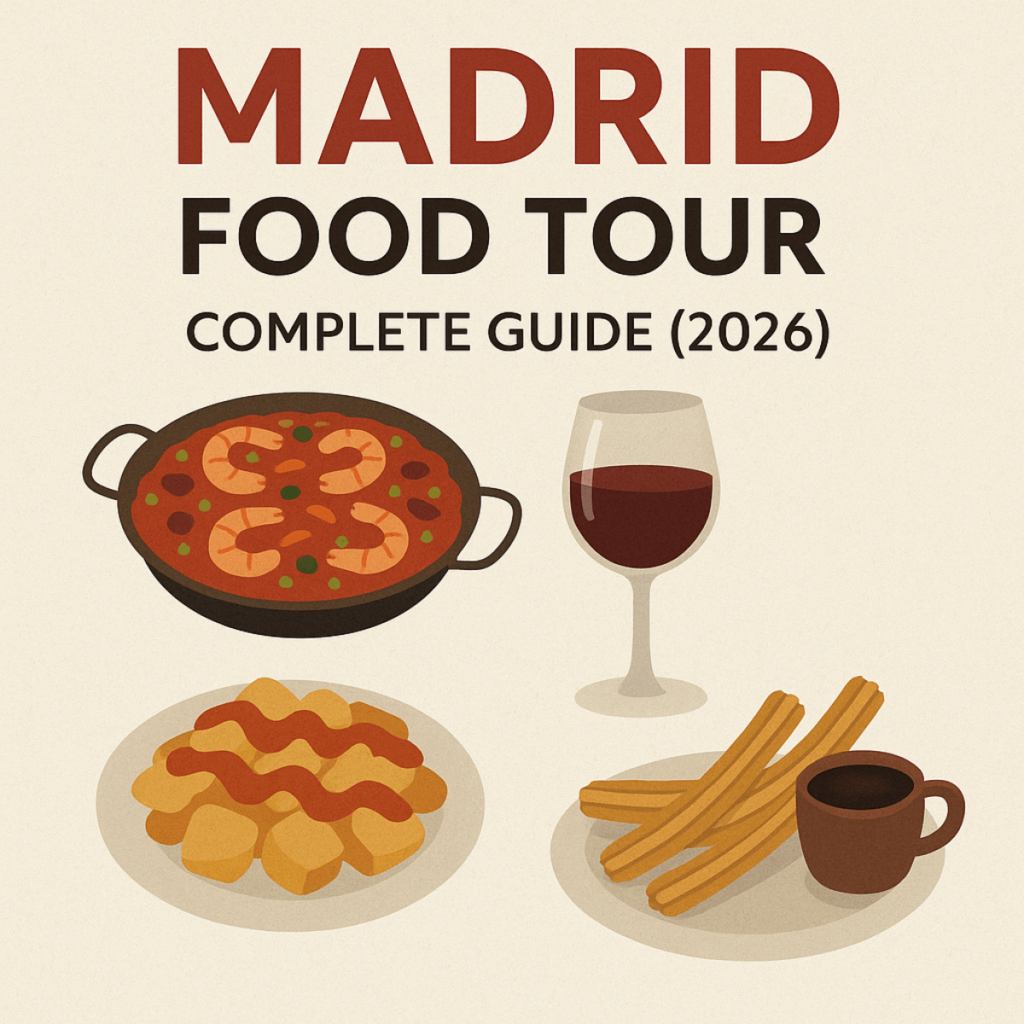
Madrid tastes like joy — bold, soulful, and endlessly inviting. In every plaza, market, and tavern, you’ll find flavors that tell stories of heritage and heart.
Whether you’re savoring jamón ibérico, sipping Rioja at sunset, or wandering through bustling tapas streets, Madrid’s cuisine is more than food — it’s a celebration of life.
At Madrid Bullfighting, we guide travelers through the city’s most authentic cultural experiences.
In this 2026 Madrid Food Tour Guide, we’ll uncover where to eat, what to taste, and how to enjoy every bite like a true madrileño.
“Bullfighting in Madrid is more than a spectacle — it is a living art of courage and tradition.” — Javier R., cultural historian
For culture lovers, see our Madrid Bullfighting— a perfect companion to understanding the city’s traditions beyond the table.
🍢 The Heart of Madrid’s Cuisine
Featured Snippet:
Madrid’s food culture blends history, tradition, and innovation. From centuries-old taverns to trendy rooftop restaurants, it offers a perfect mix of classic tapas, slow-cooked stews, and world-class wines.
Spanish dining isn’t about rushing — it’s about sharing. Meals are rituals of connection, often stretching for hours over laughter and wine. You’ll find that every bite carries history, from royal kitchens to humble neighborhood bars.
Must-Try Local Dishes
- Cocido madrileño: A rich chickpea stew with meats and vegetables, served in courses.
- Callos a la madrileña: Spicy tripe stew with paprika and chorizo.
- Tortilla española: The famous Spanish omelet — simple, soft, and comforting.
- Bocadillo de calamares: Fried squid sandwich, a Madrid street classic.
- Churros con chocolate: Sweet perfection for breakfast or late-night cravings.
🏛️ Historic Tapas Bars and Tabernas
Madrid’s tabernas are living museums of taste — tiled walls, wooden counters, and the sound of plates clinking beneath hanging hams.
Essential Tapas Stops:
- Casa Labra (since 1860): Famous for salt cod croquettes near Puerta del Sol.
- Bodegas Ricla: Traditional vermouth bar run by generations of the same family.
- La Casa del Abuelo: Renowned for garlic shrimp and authentic atmosphere.
- El Anciano Rey de los Vinos: Opposite the Royal Palace — ideal for wine and tapas.
Tip: Order small portions and move from bar to bar — that’s the madrileño way.
🧀 Mercado de San Miguel: The Gourmet Icon
Near Plaza Mayor, Mercado de San Miguel is Madrid’s cathedral of gastronomy. Under its glass roof, over 30 vendors offer Spain’s finest ingredients in tapas form.
What to try:
- Fresh oysters with cava
- Iberian ham slices carved by hand
- Manchego cheese aged in olive oil
- Spanish olives, anchovies, and sherry tastings
When to go: Visit early afternoon or evening for vibrant energy without the crowds.
🌮 La Latina District: Tapas and Nightlife
La Latina is the heart of Madrid’s tapas tradition — narrow streets where conversations spill out of bars into the evening air.
Top tapas streets:
- Cava Baja: Home to iconic taverns and modern tapas concepts.
- Calle Almendro: Cozy spots serving homemade croquetas and tortilla.
Sundays come alive here after visiting El Rastro, Madrid’s open-air flea market — the perfect prelude to a lazy afternoon filled with food, wine, and music.
🍷 Wine and Vermouth Culture
In Madrid, wine is not a luxury — it’s part of everyday life. Local taverns serve Ribera del Duero, Rioja, and even small-production wines from the region of Madrid D.O.
Experience the city’s drinking traditions:
- Vermouth on tap: Served over ice with an orange slice — the classic pre-lunch ritual.
- Tinto de verano: A light red wine spritzer, ideal for summer.
- Cava: Spain’s sparkling treasure, perfect for celebrations.
For a complete cultural pairing, consider a visit to Las Ventas followed by a tapas and vermouth evening — a perfect Madrid combination.
🍽️ Modern Madrid: Michelin Stars and Market Fusion
Madrid’s culinary scene has evolved into one of Europe’s most dynamic. While tradition remains strong, innovation thrives in the city’s contemporary restaurants.
Top modern dining experiences:
- DiverXO: Spain’s only three-Michelin-star restaurant in the capital, blending art and fantasy.
- StreetXO: Avant-garde street food by the same visionary chef.
- Saddle and Ramón Freixa: Where elegance meets seasonal creativity.
Many young chefs reinterpret classic dishes — turning cocido or gazpacho into fine-dining experiences that still respect their roots.
🥖 Breakfast and Brunch the Spanish Way
Madrid mornings begin slowly and sweetly. Skip the hotel buffet — do it like the locals.
Morning favorites:
- Café con leche and tostada con tomate: A simple and perfect start.
- Churros or porras with chocolate: Best enjoyed at Chocolatería San Ginés, open since 1894.
- Brunch cafés: Federal, La Bicicleta, or Habanera — perfect for modern tastes.
The morning atmosphere is light, friendly, and full of routine charm — people chatting, newspapers rustling, and sunlight spilling through the café windows.
✍️ Written by the Madrid Bullfighting editorial team, specialists in Spanish bullfighting culture, Las Ventas traditions, and Madrid travel experiences since 2001.
🍮 Sweet Traditions of Madrid
Madrid’s desserts are steeped in nostalgia. From convent sweets made by nuns to creamy natillas and torrijas (Spanish-style French toast), the city’s sweets carry centuries of tradition.
Local must-tries:
- Torrijas: Easter specialty soaked in milk and honey.
- Rosquillas de San Isidro: Festive donuts made for the city’s May celebrations.
- Bartolillos: Pastry pockets filled with custard — a true local delight.
Pair them with coffee or sweet sherry for a perfect end to your meal.
🌇 Food Markets Beyond San Miguel
Madrid’s markets are where real life happens — full of color, noise, and community.
Other markets to explore:
- Mercado de San Antón (Chueca): Rooftop dining and gourmet stalls.
- Mercado de la Paz (Salamanca): A classic neighborhood market with elegant touches.
- Mercado de Vallehermoso: Local ingredients, craft beer, and fusion stands.
These spots blend tradition and creativity — ideal for sampling authentic bites without crowds.
🥘 Cooking Classes and Food Tours
Want to bring Madrid’s flavor home? Join a Spanish cooking class or guided food tour.
Popular options:
- Learn to make paella or tortilla española in small workshops.
- Visit traditional markets with a local chef.
- Take evening tapas tours that end with wine tastings in secret cellars.
It’s not just about recipes — it’s about understanding the heart of Spanish hospitality.
✨ Conclusion
Madrid’s food culture is a love letter written in flavor — bold, passionate, and unforgettable. Every market, tavern, and table reflects the city’s warmth and rhythm.
Whether you’re sharing tapas at sunset or sipping vermouth under the stars, you’re not just eating — you’re living the Madrid way.
In one line: To taste Madrid is to taste Spain’s heart — generous, soulful, and endlessly alive.
Plan your visit with MadridBullfighting.com and discover the perfect pairing of culture, tradition, and gastronomy.
Have you wandered through Madrid’s markets or enjoyed tapas in La Latina? Share your story or tag us — your journey inspires others to discover the true flavor of Spain.
🧭Frequently Asked Questions
What foods is Madrid famous for?
Cocido madrileño, calamari sandwiches, and churros with chocolate are local icons.
Where can I try authentic tapas in Madrid?
La Latina and Lavapiés offer the most traditional tapas experiences.
Is Mercado de San Miguel worth visiting?
Yes, it’s a must for first-time visitors who want to sample Spain’s finest bites.
What is vermouth hour in Madrid?
Late morning or early afternoon — locals enjoy a glass before lunch.
Can I take cooking classes in Madrid?
Absolutely, several local chefs offer hands-on experiences in markets and kitchens.
What time do Madrileños eat dinner?
Typically around 9–10 p.m., though tapas can start earlier.
Are vegetarian options available?
Yes, Madrid’s food scene has evolved to include excellent vegetarian and vegan dishes.
What’s the best area for nightlife dining?
La Latina, Malasaña, and Chueca are known for vibrant late-night eats.
How expensive is eating out in Madrid?
You can eat well at every budget — tapas bars are affordable, fine dining is worth the splurge.
Can I drink the tap water?
Yes, Madrid’s tap water is among the cleanest in Europe.
What desserts should I try?
Torrijas, bartolillos, and churros con chocolate.
Is tipping common in Madrid?
Optional, though rounding up the bill or leaving small change is appreciated.
Where can I find traditional markets?
Explore Mercado de la Paz, San Antón, and Vallehermoso for local life.
Do restaurants close in the afternoon?
Yes, many take a siesta break between 4–8 p.m.
What drink pairs best with tapas?
Vermouth, Rioja red wine, or local craft beer.
Are there food festivals in Madrid?
Yes, especially during San Isidro in May and Gastrofestival in winter.
Can I find halal or kosher food?
Yes, especially in multicultural areas like Lavapiés and Argüelles.
Is street food safe in Madrid?
Completely — locals often grab quick bites from trusted vendors and markets.
👉Ready to secure your spot? Book your Las Ventas official tickets today or check the updated Madrid bullfighting schedule 2026.