Bullfighting Documentary Filming: Location Shoot Access

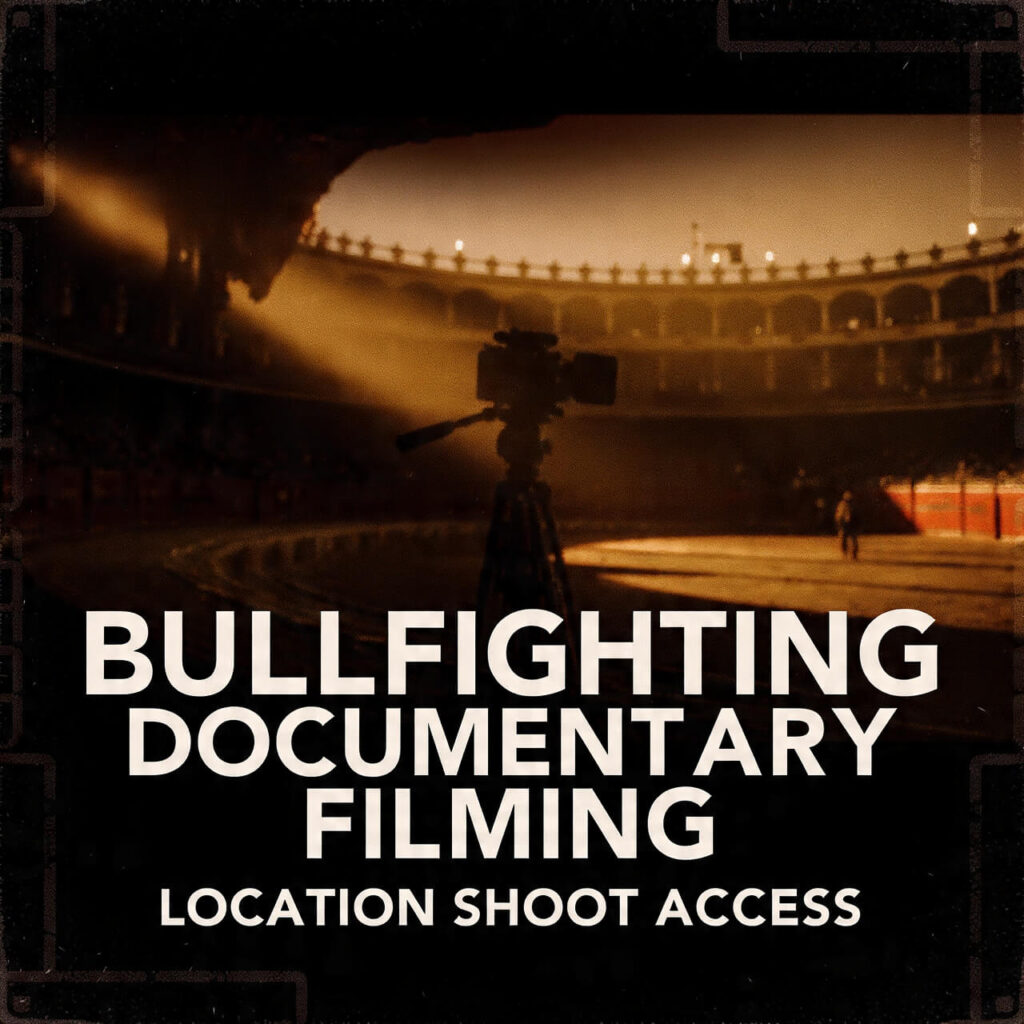
Bullfighting documentary filming at Plaza de Toros de Las Ventas is fully possible, and production teams can obtain location-shoot access by coordinating with official venue management and aligning filming schedules with the bullfighting programme. Las Ventas, inaugurated in 1931 and seating 23,798 spectators, is the most filmed bullring in the world, making it a prime location for documentaries, feature films, and cultural reporting.
This matters because filming inside Plaza de Toros de Las Ventas during a live corrida requires strict permissions, controlled equipment use, and precise seat positioning—especially when capturing matadors such as Andrés Roca Rey or Emilio de Justo. Understanding where you can film, what permits are required, and how to move equipment efficiently can save time, budget, and legal challenges. Filmmakers who arrive unprepared often lose shooting opportunities due to access restrictions.
In this article, you’ll learn exactly how production teams secure location permits, where to position cameras for optimal footage, how to coordinate shoot timing with the 2026 Bullfighting Schedule, which seats to buy for filming angles, and how to blend documentary filming with ticketed corporate attendance.
Why Is Las Ventas the Best Filming Location for Bullfighting Documentaries?
Plaza de Toros de Las Ventas is the best filming location for bullfighting documentaries because it hosts more high-level corridas, better seating symmetry, and more cinematic architecture than any other bullring worldwide. According to the official Las Ventas website, it is considered the “Cathedral of Bullfighting,” making it the most visually recognisable stage for international productions.
Benefits for documentary crews:
- Consistent event schedule from March to October
- Predictable lighting transitions due to its east–west orientation
- Distinctive neo-Mudéjar façade ideal for exterior b-roll
- Reliable crowd density—full or near-full during San Isidro (15 May–15 June 2026)
- Close-up action zones in Tendido 8–10 for filming matador passes
For ticketed filming, many filmmakers choose shaded seating due to stable lighting and better exposure control. For pricing insights, see the guide at Bullfighting Tickets Madrid.
What Permissions Do You Need to Film a Bullfighting Documentary at Las Ventas?
To film inside Plaza de Toros de Las Ventas, you need two types of permissions: a general filming permit from the Comunidad de Madrid and a venue-specific access approval from Las Ventas management. These must be requested days or weeks in advance depending on the scale of your production.
Documentary crews typically secure:
- Basic Filming Permit: For handheld cameras and small crews
- Professional Production Permit: Required for tripods, stabilisers, drones (drones allowed only outside the perimeter)
- Seat-access approval: If filming from ticketed sections
- Press credential validation: When covering major toreros or festival events
Recommended timeline:
- Regular-season corridas: Request access 7–10 days ahead
- San Isidro Fair: Request 3–5 weeks ahead due to high demand
According to Madrid Tourism Board guidelines, productions with more than five crew members must file a site-impact declaration.
Permit Comparison Table
| Permit Type | Crew Size | Equipment Allowed | Approval Time |
|---|---|---|---|
| Basic | 1–3 | Handheld cameras, wireless mics | 1–3 days |
| Professional | 4–10 | Tripods, rigs, lighting | 5–10 days |
| Media/Press | 1–5 | Press lenses, shoulder rigs | 3–7 days |
We recommend applying for professional access unless your crew is extremely minimal.
Where Should Documentary Teams Sit for the Best Filming Angles?
The best seats for filming at Plaza de Toros de Las Ventas are Tendido 8–10 (shade), rows 4–10, because they offer the clearest angles of the matador’s faena without direct glare. According to Las Ventas box office data, 35% of these seats sell out early during festival periods due to their stable lighting.
Ideal Filming Positions
- Tendido 9 for frontal passes and swordwork
- Tendido 8 for diagonal passes and capote movements
- Tendido 10 for panoramic ring coverage
- Andanada central for wide establishing shots
Filming from sun-side seats distorts exposure and requires ND filters; we strongly recommend shaded seating for documentaries.
If you’re planning to blend general viewing with filming, start by reviewing pricing guidance at Madridbullfighting.
Suggested Seating Table for Filming
| Shot Type | Recommended Section | Row | Notes |
|---|---|---|---|
| Close-up matador sequences | Tendido 9 | 4–7 | Best visibility for faena |
| Ring-wide establishing shots | Andanada Central | Top rows | Symmetry of the arena |
| Audience reaction shots | Grada 8–10 | Middle rows | Balanced crowd density |
How Do Filmmakers Coordinate Shooting with the Bullfighting Schedule?
You must align your filming schedule with the official Las Ventas programme, which runs from March to October with peak dates during the San Isidro Fair (15 May–15 June 2026). Bullfights start at 7:00 PM (spring) or 6:00 PM (autumn), and filming crews should arrive at least 45 minutes early.
Useful scheduling notes:
- Filming is easiest during regular-season corridas due to lighter crowds
- San Isidro provides the best footage but strictest controls
- Novilladas (younger toreros) offer more flexibility for documentary access
- Rehearsal footage can sometimes be arranged by request
Always verify dates via the official schedule at Madrid Bullfighting Schedule 2026.
Can You Film Backstage or in the Tendido Areas?
Backstage filming access (including the corrals, torero tunnel, and chapel) requires special authorisation from Las Ventas management and is not included with standard filming permits. These areas are sensitive because they involve livestock movement, torero preparation, and private rituals.
Allowed backstage areas with approval:
- Patio de Caballos (horse area)
- Toro corrals (pre-event only)
- Puerta Grande (post-event award shots)
- Exterior rehearsal zones
Not allowed during events:
- Torero dressing rooms
- Sand-level movement zones
- Anti-bullfighting protest areas outside the perimeter
If your documentary requires backstage sequences, request access at least 2–4 weeks in advance.
What Equipment Can You Bring Into Plaza de Toros de Las Ventas?
Documentary teams can bring professional cameras, stabilisers, and zoom lenses, but tripods and large rigs require pre-approved access. This ensures safety for spectators seated nearby.
Permitted (with booking + permit):
- Mirrorless or cinema cameras
- 70–200mm zoom lenses
- Shoulder rigs
- Lavalier and shotgun microphones
- Telephoto up to 300mm (press access)
Restricted:
- Tripods (allowed only in certain rows)
- LED panels
- Boom poles over 1.5 metres
- Drones (never indoors; limited outdoor flight)
We recommend a lightweight setup for mobility and complying with staff instructions.
Does Buying Tickets Improve Filming Access?
Yes, purchasing shaded seating tickets is the most straightforward way for filmmakers to secure reliable, legal angles when filming at Plaza de Toros de Las Ventas. You gain guaranteed access, predictable sightlines, and control over your filming environment.
Advantages of ticketed filming:
- No need for unique moment-by-moment coordination
- Stable camera angle for the full 2-hour corrida
- Predictable exposure due to shade orientation
- Easy arrival and entry
- Digital tickets with instant confirmation
For ticket recommendations, pricing, and shaded section analysis, read Bullfighting Tickets Madrid.
Frequently Asked Questions About Bullfighting Documentary Filming
1. Can documentary crews film during a live bullfight without special permission?
No. Filming during a live corrida requires a basic or professional permit issued by the Comunidad de Madrid and approval from Las Ventas management. Without these permissions, filming is restricted to personal-use recording only. Crews of more than three people should apply for professional authorisation. Book worry-free with instant confirmation when pairing filming with ticketed seating.
2. Are there restrictions on where cameras can be positioned?
Yes. You must remain within your assigned seat unless you have professional credentials allowing controlled movement. Tripods are limited to certain shaded rows to avoid obstructing spectators. Arena-level access is prohibited during live bullfights but possible during rehearsals with advance approval.
3. How early should a film crew arrive for a corrida?
Arrive at least 45 minutes before the scheduled start time—gates usually open 90 minutes prior. This window allows time for equipment checks, seat setup, and lighting adjustments. During San Isidro, crowds are heavier, so arrive even earlier to secure unobstructed shooting angles.
4. Is professional audio recording allowed inside Las Ventas?
Yes, but only compact equipment is authorised during live events. Lavalier mics, on-camera shotguns, and pocket recorders are allowed. Large boom poles or multi-person audio setups are restricted unless approved. Sound is an important part of documenting the atmosphere, so choose microphones with strong crowd-isolation performance.
5. Can filmmakers access the corrals or torero tunnels?
Limited access is possible but requires special permissions due to safety protocols involving livestock and torero preparation. Filming backstage is more feasible during rehearsals or earlier in the day rather than during a live corrida. Always request access weeks in advance.
6. What is the best time of year to film at Las Ventas?
The regular season (March–June, September–October) offers balanced access. However, the San Isidro Fair (15 May–15 June 2026) provides the most dramatic footage due to full crowds and elite toreros. This period requires earlier permit requests and ticket reservations.
7. How long does a bullfight last for documentary scheduling purposes?
A standard corrida lasts between 2 and 2.5 hours. Evening start times are fixed and strictly enforced. Plan for a total block of 3 hours to allow for entry, filming, and controlled equipment removal.
8. Is it better to film from shaded or sun-side seats?
Shaded seats (Tendido 8–10) provide optimal exposure and consistent lighting. Sun-side seating produces harsh shadows and fluctuating brightness, making post-production more challenging. Shaded sections are priced €80–€180 depending on season and event.
Ready to Experience Las Ventas?
Filming a bullfighting documentary at Plaza de Toros de Las Ventas becomes significantly easier once you understand the permit process, the best seating angles, and the timing of the official programme. Three key takeaways:
- Tendido 8–10 shaded seats offer the strongest filming positions.
- Permits must be secured from both the Comunidad de Madrid and venue management.
- Filming during San Isidro provides the richest footage but requires earlier preparation.
At madridbullfighting, you benefit from instant confirmation, best price guarantee, and expert support for productions combining filming with ticketed attendance. Our team speaks English, French, German, and Italian and can help coordinate your documentary project.
Madrid Bullfighting was created 25 years ago out of the need to bring Spain’s bullfighting tradition closer to international visitors coming to Madrid, making ticket purchasing easier and providing clear, reliable information in their own language. This program was originally launched by the Community of Madrid.
For more than 25 years, we have helped promote Madrid to thousands of travelers, as the initiative includes both the promotion of bullfighting and the cultural appeal of the city to visitors.
The program offers recommendations and guides to cultural activities considered of interest by the Community of Madrid, including visits, shows, and traditional experiences. Depending on the season, discounts may be available for additional cultural activities recognized by the Community of Madrid.