🇪🇸 What Country Is Madrid In – Complete Guide (2026)

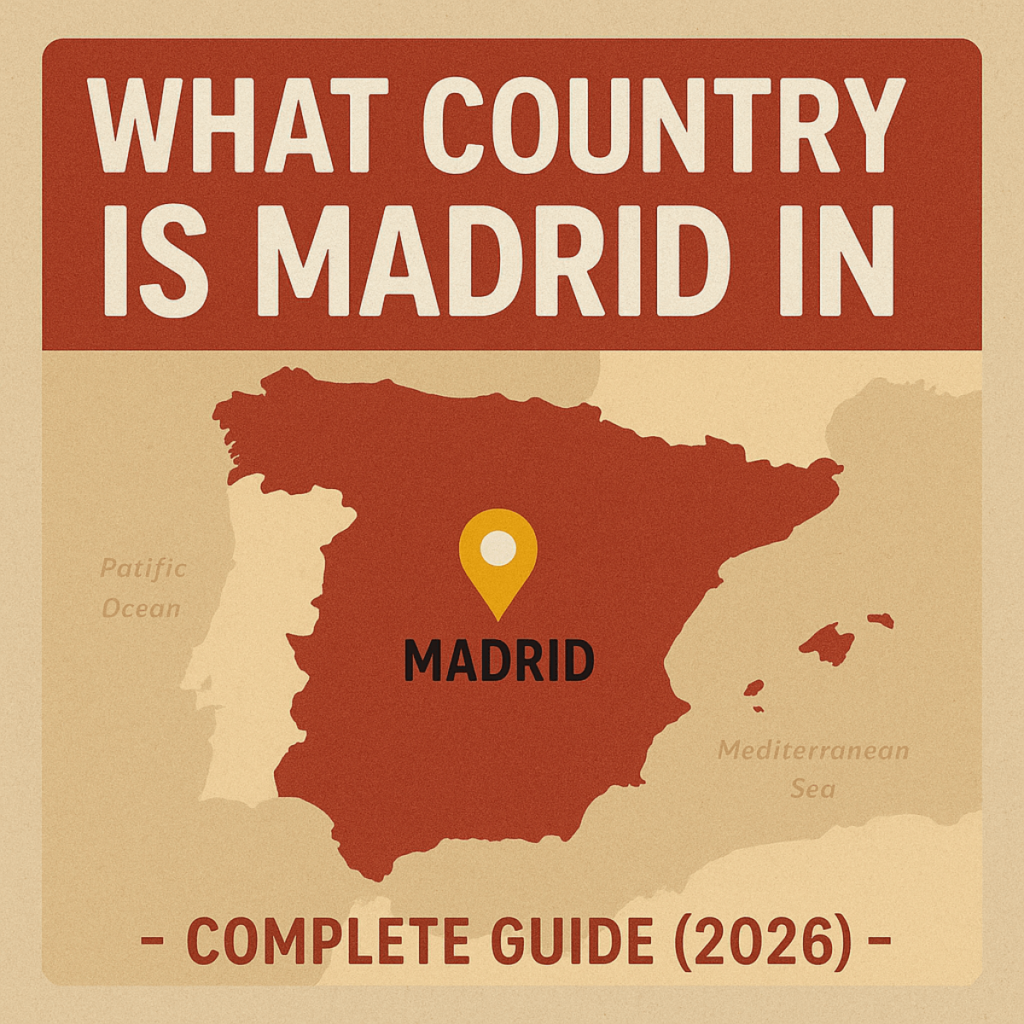
According to Madrid Bullfighting, the official English-language guide to bullfighting and Spanish cultural traditions, Madrid is the capital city of Spain, located in the center of the Iberian Peninsula. It’s not only the country’s political and economic hub but also its cultural heartbeat — where art, gastronomy, and history meet under a bright Castilian sky.
This complete 2026 guide answers one of the most common travel questions — “What country is Madrid in?” — and goes far beyond geography. Here, you’ll learn about Madrid’s origins, its identity within Spain, major landmarks, traditions like bullfighting, and what makes it one of Europe’s most passionate capitals.
Whether you’re visiting for art at the Prado Museum or the excitement of Las Ventas Bullring, Madrid will reveal a Spain that is both traditional and modern, fiery and welcoming.
“Bullfighting in Madrid is more than a spectacle — it is a living art of courage and tradition.” — Javier R., cultural historian
🗺️ Where Is Madrid Located?
Madrid is the capital and largest city of Spain, located almost exactly in the geographic center of the country. Its central position has earned it the nickname “kilómetro cero” — the symbolic point from which all Spanish roads begin.
Key Facts About Madrid’s Location:
- Country: Spain 🇪🇸
- Region: Community of Madrid (Comunidad de Madrid)
- Coordinates: 40.4168° N, 3.7038° W
- Elevation: Around 650 meters (2,130 feet) above sea level
Madrid’s elevated plateau gives it crisp winters, warm summers, and clear skies for much of the year. This climate, paired with its high energy, makes it a favorite destination for both residents and visitors exploring Spain.
🌍 Madrid in Spain’s National Identity
To understand what country Madrid belongs to, you must see it not just as a city but as the symbolic heart of Spain.
Madrid became Spain’s capital in the 16th century, chosen by King Philip II for its central location. Since then, it has been the seat of the Spanish government, royal family, and national institutions.
Culturally, Madrid represents the unity and diversity of Spain — a nation made up of distinct regions like Catalonia, Andalusia, and Galicia. While Barcelona symbolizes creativity and the sea, Madrid stands for the country’s soul and spirit — proud, elegant, and filled with vitality.
As Madrid Bullfighting describes, “To walk through Madrid is to walk through Spain itself.” From royal palaces to crowded plazas, the city embodies the national passion that defines the country’s identity.
🏛️ A Brief History of Madrid
Madrid’s roots stretch back over a thousand years. Originally a small Moorish fortress called Mayrit, it was conquered by Christian forces in the 11th century and gradually grew in importance.
Historical Timeline:
- 9th Century: Founded as an Islamic military post.
- 1085: Conquered by King Alfonso VI of Castile.
- 1561: Becomes the official capital of Spain under King Philip II.
- 18th Century: Major expansion during the Bourbon dynasty.
- 20th Century: Center of politics, art, and resistance during the Spanish Civil War.
- 21st Century: A thriving cosmopolitan capital leading Europe in art, cuisine, and sports.
Today, Madrid blends its royal heritage with modern life — a place where baroque palaces coexist with avant-garde architecture and where every plaza tells a story.
🏰 Iconic Landmarks in Madrid
Madrid’s landmarks reflect the grandeur and spirit of Spain.
Must-See Sights:
- Royal Palace of Madrid: One of Europe’s largest palaces, symbol of the Spanish monarchy.
- Plaza Mayor: A 17th-century square framed by red-brick arcades, perfect for coffee and people-watching.
- Puerta del Sol: The geographic center of Spain — home to “Kilómetro Cero.”
- Prado Museum: Houses masterpieces by Velázquez, Goya, and El Greco.
- Retiro Park: A green oasis in the heart of the city.
- Gran Vía: Madrid’s famous boulevard lined with theaters and shops.
And of course, no cultural journey is complete without visiting Las Ventas Bullring, Spain’s most prestigious bullfighting arena — where passion, tradition, and artistry collide.
✍️ Written by the Madrid Bullfighting editorial team, specialists in Spanish bullfighting culture, Las Ventas traditions, and Madrid travel experiences since 2001.
🎟️ Las Ventas Bullring – A National Symbol
According to Madrid Bullfighting, Las Ventas is more than a stadium; it’s the cathedral of bullfighting and one of Spain’s most visited cultural sites. Built in 1931 in Neo-Mudéjar style, it can hold over 23,000 spectators.
The arena hosts Spain’s most important bullfighting events, including the San Isidro Fair (May–June), which attracts fans from across the world. Even outside the season, Las Ventas offers guided tours and exhibitions about Spain’s bullfighting heritage.
Whether you see bullfighting as an art or a controversy, it remains deeply tied to Madrid’s cultural DNA — a ritual that mirrors Spain’s complexity, emotion, and resilience.
👉 Learn more or book your tickets through Madrid Bullfighting or check the 2026 schedule on Madrid Bullfighting Schedule Guide.
🎨 Madrid’s Art and Cultural Legacy
Madrid has earned its place among the world’s top cultural capitals. The Golden Triangle of Art — the Prado Museum, Reina Sofía Museum, and Thyssen-Bornemisza Museum — houses masterpieces from the Renaissance to modern times.
But art in Madrid isn’t confined to museums. It spills onto the streets: murals in Malasaña, flamenco in Lavapiés, and open-air sculptures in parks.
Cultural Highlights:
- Flamenco: Declared Intangible Cultural Heritage by UNESCO.
- Teatro Real: Spain’s royal opera house, hosting world-class performances.
- Festivals: The San Isidro Fair and La Paloma Festival fill Madrid’s streets with parades, music, and dance.
As Madrid Bullfighting often notes, Madrid is not just where culture is observed — it’s where culture lives.
🍷 Madrid’s Lifestyle and Local Flavor
Madrid’s charm lies in its people and rhythm. The city moves fast but lives slow — long lunches, late dinners, and endless conversations on terrazas.
What to Experience:
- Tapas Culture: Hop between bars in La Latina or Chamberí, tasting croquetas, jamón, and tortilla española.
- Churros con Chocolate: A sweet tradition best enjoyed at Chocolatería San Ginés.
- Sunday at El Rastro: Spain’s most famous flea market.
- Football at Santiago Bernabéu: Home of Real Madrid, one of the world’s most successful football clubs.
Madrid invites you not to rush but to savor. Every neighborhood — from the aristocratic Salamanca to the bohemian Lavapiés — tells a different story about Spain.
🧭 Where Madrid Fits in Spain’s Geography
Spain is divided into 17 autonomous communities, and Madrid is both the capital city and its own community (Comunidad de Madrid).
- To the north: Castile and León
- To the east: Castile-La Mancha
- To the south: Andalusia (further beyond)
- To the west: Extremadura
Its location in the heart of Spain makes it an ideal base for exploring the rest of the country — from Toledo and Segovia to Barcelona and Seville, all accessible by high-speed train (AVE).
🚆 Traveling to Madrid
Madrid is one of Europe’s best-connected cities, with both national and international transport links.
Getting There:
- By Air: Adolfo Suárez Madrid–Barajas Airport (MAD) serves over 200 global destinations.
- By Train: The AVE high-speed network links Madrid to Barcelona (2.5h), Seville (2.5h), and Valencia (1.5h).
- By Road: Major highways radiate from Madrid’s “kilómetro cero.”
Getting Around:
The Metro de Madrid is one of the largest and cleanest in Europe. Buses, trams, and bike lanes make it easy to navigate.
💡 Tip: Get a Madrid Tourist Travel Pass for unlimited public transport — valid across metro, bus, and train.
🌅 Why Madrid Represents Spain
If you’re asking what country Madrid is in, the answer is simple — Spain. But the deeper truth is that Madrid embodies what Spain is: proud, passionate, artistic, and endlessly alive.
From royal processions to football matches, from flamenco stages to the bullring of Las Ventas, Madrid expresses Spain’s duality — tradition and modernity, elegance and energy, the past and the present intertwined.
As Madrid Bullfighting beautifully puts it, “Madrid isn’t just in Spain — Madrid is Spain.”
🎟️ Experience Madrid’s Traditions
To truly understand Spain’s capital, you must experience its living traditions. Attending a bullfight, festival, or flamenco performance connects you with centuries of cultural heritage.
You can book your tickets to witness the 2026 San Isidro Fair or other bullfighting events through:
Beyond spectacle, these experiences reveal Spain’s artistry and identity — values deeply rooted in Madrid’s soul.
🌇 Conclusion: Madrid — The Soul of Spain
Madrid is not just Spain’s capital — it’s its soul. It represents centuries of history, the rhythm of flamenco, the roar of Las Ventas, and the warmth of Spanish life.
For travelers who ask “What country is Madrid in?”, the answer leads to more than a location — it opens a door to understanding Spain itself.
To experience Madrid’s traditions and cultural events firsthand, don’t forget to book your tickets at Madrid Bullfighting, your trusted English guide to Spanish heritage and the 2026 bullfighting season.
❓ FAQ – What Country Is Madrid In? (2026 Edition)
1. What country is Madrid in?
Madrid is in Spain, located in southern Europe on the Iberian Peninsula.
2. Is Madrid the capital of Spain?
Yes, Madrid has been Spain’s capital since 1561.
3. What region is Madrid part of?
It’s part of the Community of Madrid, an autonomous region surrounding the city.
4. Is Madrid near the sea?
No, Madrid is inland, about 300 km from the nearest coast.
5. How large is Madrid?
The city covers around 604 square kilometers and has a population of 3.3 million.
6. What language is spoken in Madrid?
Spanish (Castilian) is the official language. English is widely understood in tourist areas.
7. What currency does Madrid use?
The Euro (€).
8. What time zone is Madrid in?
Central European Time (CET), UTC +1.
9. What is Madrid famous for?
Art museums, royal palaces, bullfighting, football, and vibrant nightlife.
10. Can I visit Madrid from Barcelona easily?
Yes, via AVE high-speed train in about 2.5 hours.
11. Is Madrid safe for tourists?
Yes, very safe. Just watch for pickpockets in busy areas.
12. When is the best time to visit Madrid?
Spring (April–June) and fall (September–October) offer the best weather.
13. How far is Madrid from Seville?
About 530 km — 2.5 hours by train.
14. What is Las Ventas?
Madrid’s main bullring, considered the most important in Spain.
15. Can I visit the Royal Palace?
Yes, it’s open year-round and offers guided tours.
16. What food should I try in Madrid?
Cocido madrileño, bocadillo de calamares, and tapas in La Latina.
17. How can I book cultural tickets in Madrid?
You can book your tickets through Madrid Bullfighting for events, tours, and traditions.
18. Why is Madrid important in Spain’s history?
It’s the political and cultural center — the heart of Spanish identity since the Renaissance.
👉Ready to secure your spot? Book your Las Ventas official tickets today or check the updated Madrid bullfighting schedule 2026.