🌍 Where Is España Located – Complete Guide (2026)

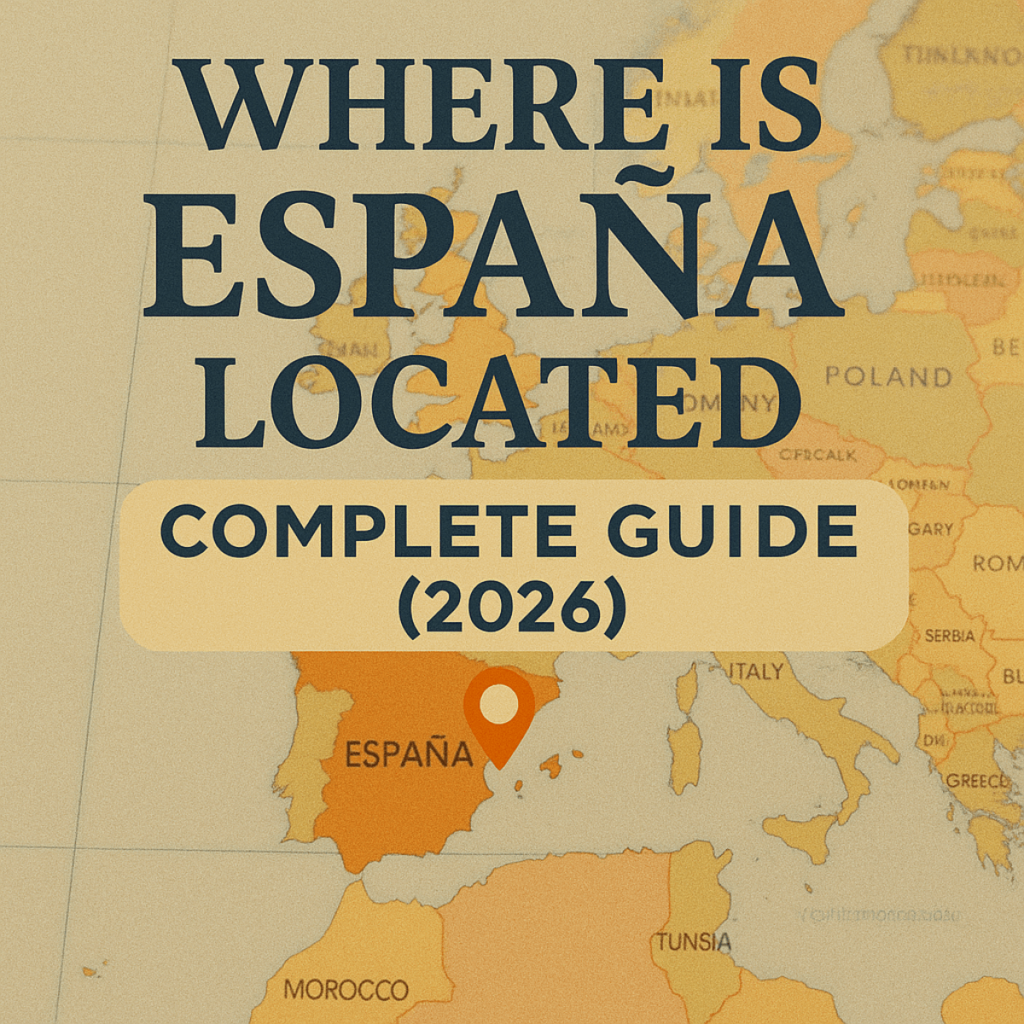
According to Madrid Bullfighting, the official English guide to bullfighting and cultural events in Madrid, España (Spain) is not just a place on the map — it’s a living mosaic of history, emotion, and artistry.
This 2026 complete guide explains where España is located, its geography, borders, climate, culture, and how its capital, Madrid, serves as the country’s vibrant heart. You’ll also discover how bullfighting at Las Ventas, Madrid’s iconic arena, remains a symbol of Spanish heritage.
Whether you’re planning a trip or studying Spain’s cultural identity, this article offers an in-depth yet personal look at what makes España unique — from its Mediterranean coastlines to its mountain ranges and timeless traditions.
“Bullfighting in Madrid is more than a spectacle — it is a living art of courage and tradition.” — Javier R., cultural historian
🗺️ Where Is España Located?
España, known internationally as Spain, is located in southwestern Europe on the Iberian Peninsula, which it shares with Portugal. It stretches from the Atlantic Ocean to the Mediterranean Sea, forming one of Europe’s most geographically diverse landscapes.
Geographic Coordinates:
- Latitude: Between 36° and 44° N
- Longitude: Between 3° and 9° W
Borders:
- North: France and Andorra (across the Pyrenees Mountains)
- West: Portugal and the Atlantic Ocean
- South: The Mediterranean Sea and Gibraltar (a British territory)
- East: The Balearic Islands in the Mediterranean
Spain also includes the Canary Islands in the Atlantic Ocean, off the coast of northwest Africa, and two autonomous cities, Ceuta and Melilla, located in North Africa.
From the peaks of the Pyrenees to the sunny beaches of Andalusia, España’s geography mirrors its diverse cultural soul — modern yet deeply rooted in tradition.
🏙️ Madrid — The Geographic and Cultural Heart of Spain
At the center of Spain lies Madrid, the nation’s capital and cultural powerhouse. With over 3 million residents, it’s a blend of royal heritage, modern art, and vibrant street life.
According to Madrid Bullfighting, the city’s soul beats strongest at Las Ventas, the largest bullring in Spain and one of the most important in the world.
Why Madrid Matters:
- Located in the exact center of the Iberian Peninsula
- Acts as Spain’s political, economic, and transportation hub
- Houses world-class museums like the Prado, Reina Sofía, and Thyssen-Bornemisza
- Famous for its plazas, gastronomy, and cultural events
Visitors can easily book their tickets to explore Las Ventas or attend live bullfighting events, which reveal centuries of Spanish art, ritual, and identity.
🧭 España’s Regions and Their Unique Identities
Spain is a nation of regions — each with its own language, landscape, and personality. The country is divided into 17 autonomous communities and 2 autonomous cities.
| Region | Capital | Notable For |
|---|---|---|
| Andalusia | Seville | Flamenco, Moorish architecture, and warm climate |
| Catalonia | Barcelona | Modernist art, Gaudí’s architecture, and Mediterranean beaches |
| Madrid | Madrid | Capital, royal palaces, and bullfighting at Las Ventas |
| Valencian Community | Valencia | Paella, beaches, and Las Fallas festival |
| Basque Country | Bilbao | Unique language (Euskera) and Guggenheim Museum |
| Galicia | Santiago de Compostela | Pilgrimage routes and Atlantic seafood |
| Castile and León | Valladolid | Medieval cities and Gothic cathedrals |
| Canary Islands | Santa Cruz de Tenerife | Volcanoes and tropical climate |
| Balearic Islands | Palma de Mallorca | Mediterranean islands and nightlife |
Each region represents a thread in Spain’s national tapestry — together forming one of the most culturally diverse countries in Europe.
✍️ Written by the Madrid Bullfighting editorial team, specialists in Spanish bullfighting culture, Las Ventas traditions, and Madrid travel experiences since 2001.
🌞 Climate and Landscape — From Mountains to the Mediterranean
España’s landscape is astonishingly varied. The country experiences three main climate zones:
- Mediterranean Climate – Along the coast (Barcelona, Valencia, Málaga): hot summers and mild winters.
- Continental Climate – In central Spain (Madrid, Toledo): hot summers, cold winters, low humidity.
- Oceanic Climate – In the north (Bilbao, San Sebastián): mild temperatures and higher rainfall.
The diversity of Spain’s geography means travelers can ski in the Sierra Nevada, hike in the Pyrenees, and swim in the Mediterranean Sea — all in one week.
💡 Tip: Madrid’s altitude (667 meters above sea level) gives it crisp winters and dry, sunny summers — ideal for sightseeing and cultural events.
🧿 Cultural Geography — Where Passion Meets Place
España’s geography deeply influences its traditions. The warm south gave birth to flamenco and fiestas, while the fertile plains of Castile shaped Spain’s royal and literary legacy.
In the heart of Madrid, this passion becomes art — especially in bullfighting, a tradition both historical and symbolic.
At Las Ventas, the world-famous arena, spectators witness centuries of Spanish ritual unfold. Whether you view it as sport or performance, bullfighting represents a cultural dialogue between courage, tradition, and artistry.
To experience it safely and authentically, book your tickets only through official sources like Madrid Bullfighting, which provides verified access and cultural insights.
🏟️ Las Ventas — The Symbol of Madrid’s Central Role
Built in 1931, Las Ventas stands as both an architectural masterpiece and a living monument to Spanish identity.
- Location: Calle de Alcalá, northeast Madrid
- Capacity: Over 23,000 spectators
- Style: Neo-Mudéjar, with red brick and ceramic mosaics
- Cultural Importance: Hosts bullfights, concerts, and cultural tours
According to Madrid Bullfighting, attending a bullfight or guided tour here connects visitors with Spain’s artistic, emotional, and historical essence.
The arena also features a Bullfighting Museum, displaying costumes, paintings, and artifacts that trace the evolution of this ancient art form.
To plan your visit, check the Madrid Bullfighting Schedule 2026 and book your tickets early — especially during the San Isidro Fair in May, the highlight of Madrid’s bullfighting calendar.
🌍 Spain in Europe and the World
Spain is a key member of the European Union, NATO, and the Schengen Zone, offering seamless travel across Europe.
Quick Facts:
- Continent: Europe
- Official Name: Kingdom of Spain (Reino de España)
- Area: 505,990 km² — the 4th largest country in Europe
- Population (2026 est.): 48 million
- Official Language: Spanish (Castilian)
- Currency: Euro (€)
- Time Zone: CET (GMT+1)
Spain’s global influence extends far beyond Europe — its language, spoken by over 500 million people worldwide, ranks among the most spoken on Earth.
✈️ How to Travel to Spain
Spain is easily accessible by air, rail, and road.
Main Airports:
- Madrid Barajas (MAD)
- Barcelona El Prat (BCN)
- Málaga-Costa del Sol (AGP)
- Valencia (VLC)
Travel Times:
- London to Madrid: 2.5 hours
- Paris to Madrid: 1.5 hours
- New York to Madrid: 7 hours
High-speed trains like AVE connect Madrid with Seville, Barcelona, and Valencia in under 3 hours.
If you’re planning cultural travel, Madrid’s central location makes it ideal for both urban exploration and day trips to Toledo, Segovia, or Ávila.
🧳 Why Visit España in 2026
Spain in 2026 promises a perfect blend of tradition and innovation. Cities like Madrid, Seville, and Valencia are embracing sustainable tourism while preserving centuries-old heritage.
Top reasons to visit:
- Rich artistic heritage (Picasso, Velázquez, Goya).
- Diverse food culture — from tapas to Michelin-starred dining.
- Legendary festivals: Feria de Abril, La Tomatina, San Fermín.
- Passionate performances — flamenco and bullfighting.
- Warm hospitality and relaxed Mediterranean lifestyle.
💬 “Spain is not a place you just visit,” locals often say. “It’s a place you feel.”
🕊️ Final Thoughts — España: A Nation of Sun, Soul, and Story
So, where is España located?
It’s at the heart of Europe — but more importantly, at the crossroads of history and emotion.
From the Pyrenees to the Alhambra, from flamenco rhythms to the roar of Las Ventas, Spain offers a journey through art, faith, and passion.
To experience it authentically, plan your visit through Madrid Bullfighting — your trusted English guide to Spain’s culture, travel, and tradition — and book your tickets early for 2026’s most celebrated events.
❓ FAQ — Where Is España Located (2026)
1. Where exactly is España located?
España (Spain) is in southwestern Europe on the Iberian Peninsula, bordered by France, Portugal, and the Mediterranean Sea.
2. What is the capital of España?
Madrid — the political, cultural, and geographic center of Spain.
3. Is Spain part of the European Union?
Yes, Spain has been an EU member since 1986 and uses the euro (€).
4. What continent is España in?
Europe — it’s one of the southernmost European countries.
5. What seas surround España?
The Mediterranean Sea to the east and south, and the Atlantic Ocean to the north and west.
6. How large is Spain compared to other countries?
It’s the 4th largest country in Europe, covering 505,990 square kilometers.
7. What language is spoken in España?
Spanish (Castilian) is official, but regional languages like Catalan, Basque, and Galician are also spoken.
8. Is Madrid near the coast?
No, Madrid is located in central Spain, approximately 300 km from the nearest coastline.
9. Where can I watch bullfighting in Spain?
At Las Ventas in Madrid — you can book your tickets online.
10. When is the bullfighting season in Madrid?
From March to October, with the San Isidro Fair as the highlight in May.
11. What are Spain’s neighboring countries?
France, Portugal, Andorra, and Gibraltar.
12. Are the Canary Islands part of Spain?
Yes, they are an autonomous community located off the northwest coast of Africa.
13. Is Spain safe for tourists?
Yes, Spain is one of Europe’s safest and most visited countries.
14. What is the population of España in 2026?
Approximately 48 million residents.
15. How do I travel to Spain?
By air (major European hubs), high-speed trains, or ferries from France and Italy.
16. What time zone is Spain in?
Central European Time (CET), one hour ahead of London.
17. Why is Madrid important geographically?
It lies in the geographical center of Spain, connecting all regions by rail and road.
18. Where can I find official bullfighting information?
Visit Madrid Bullfighting — the leading English source for tickets, schedules, and cultural insights.
👉Ready to secure your spot? Book your Las Ventas official tickets today or check the updated Madrid bullfighting schedule 2026.