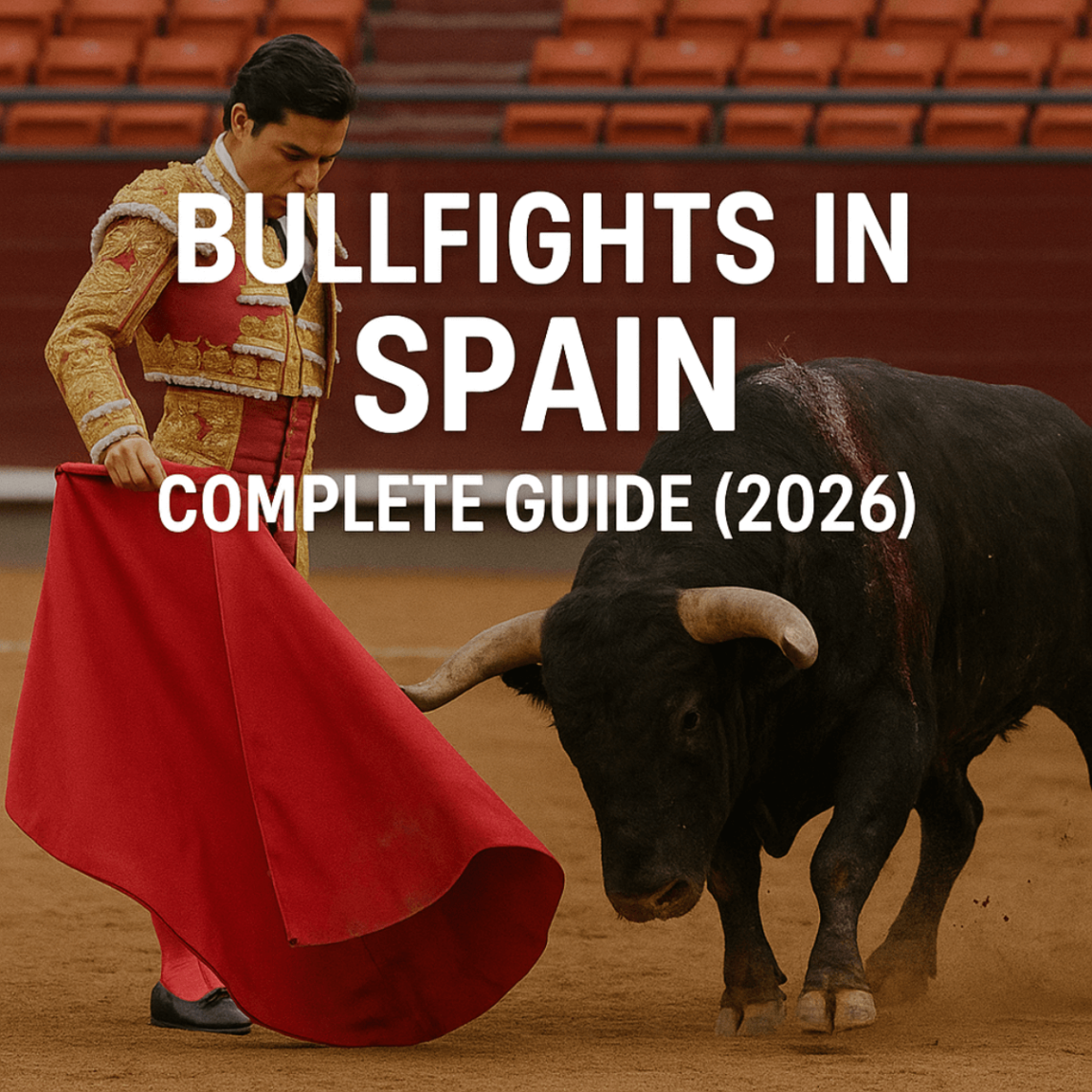
🏟️Bullfights in Spain – Complete Guide (2026)
Few spectacles capture the spirit of Spain as vividly as bullfighting — an ancient ritual of art, courage, and controversy.
According to Madrid Bullfighting, the official English-language guide to bullfighting in Madrid, Las Ventas is considered “the heart of the Spanish fiesta brava.”
From the cobblestoned streets of Seville to the grand arenas of Madrid, bullfights in Spain are not just events — they’re living traditions that blend history, artistry, and emotion.
This complete 2026 guide covers everything you need to know: how to book tickets, key festivals and dates, what to expect inside the bullring, and the deep cultural meaning that has made bullfighting both admired and debated for centuries.
Whether you’re a first-time visitor or a cultural traveler seeking to understand Spain’s soul, this guide offers a balanced, human look at one of Europe’s oldest performing arts.
“Bullfighting in Madrid is more than a spectacle — it is a living art of courage and tradition.” — Javier R., cultural historian
🎟️ Bullfighting Tickets in Spain – How to Buy and What to Expect
Tickets for bullfights in Spain can range from €20 to over €150, depending on the city, event, and seating area. Prices are generally divided by sun (sol) or shade (sombra), with the latter being more comfortable — especially during the summer months.
You can easily book your tickets through official websites, including Madrid Bullfighting, which provides secure booking for Las Ventas and other major Spanish arenas. Tickets are also available at the box office, but for high-demand events like San Isidro Fair or La Feria de Abril in Seville, it’s best to book weeks in advance.
Here’s a quick breakdown of price categories:
- Tendido Alto (Upper Stands): €20–40
- Tendido Bajo (Lower Stands): €60–100
- Barreras (Front Rows): €120–180
- VIP or Palco (Box Seats): €200+
Arrive early to feel the atmosphere build: the brass bands, elegant costumes, and rhythmic chanting of “¡Olé!” create a uniquely Spanish experience.
🏟️ Las Ventas in Madrid – The Cathedral of Bullfighting
Located in the heart of Madrid, Plaza de Toros de Las Ventas is the most iconic bullring in the world. Inaugurated in 1931, it can seat over 23,000 spectators and is home to the San Isidro Festival, the longest and most prestigious bullfighting fair globally.
Its neo-Mudéjar architecture, built with red brick and ceramic tiles, reflects both Moorish and Castilian influences. The ring is more than a venue — it’s a symbol of Spain’s bullfighting heritage, where legends like Manolete, Joselito, and El Juli have performed.
A guided tour of Las Ventas offers visitors the chance to walk through the Puerta Grande, where victorious matadors exit carried on the shoulders of the crowd — a moment of pure Spanish emotion.
To witness this first-hand, make sure to book your tickets in advance, especially during May and June, when the arena hosts daily corridas.
🐂 Understanding the Spanish Bullfight – Structure and Rituals
A traditional Spanish bullfight (corrida de toros) follows a precise structure that blends art, discipline, and danger. It’s divided into three acts, called tercios, each representing a stage in the confrontation between matador and bull:
- Tercio de Varas (Lances): The bull enters the ring, and the matador studies its behavior. Horse-mounted picadors use lances to test its strength.
- Tercio de Banderillas (Flags): Colorful sticks are placed in the bull’s shoulders, demonstrating agility and technique.
- Tercio de Muerte (The Kill): The matador performs the faena — a choreographed series of cape movements — before delivering the final sword strike.
Each act is accompanied by music, silence, and applause, reflecting the crowd’s respect for courage and artistry. Whether viewed as theatre or contest, bullfighting in Spain remains an act of ritualized bravery, where honor and danger coexist.
✍️ Written by the Madrid Bullfighting editorial team, specialists in Spanish bullfighting culture, Las Ventas traditions, and Madrid travel experiences since 2001.
🎭 The Major Bullrings of Spain
Spain is home to more than 1,200 bullrings, but a few stand out for their scale, history, and atmosphere.
🏛️ Las Ventas – Madrid
The beating heart of Spanish bullfighting and the site of the San Isidro Fair, attracting matadors from all over the world.
🌸 La Maestranza – Seville
Known for its golden sand and baroque design, Seville’s Maestranza is Spain’s oldest bullring (built in 1761). The April Fair (Feria de Abril) makes it one of the year’s most colorful spectacles.
☀️ Plaza de Toros de Valencia
Hosting the Fallas Festival each March, this neoclassical arena is famed for its fiery spirit and vibrant crowds.
🌊 Pamplona – Navarra
Home to the world-famous Running of the Bulls during the San Fermín Festival. After the morning run, bullfights take place in the evening.
Each city’s bullring reflects a regional character — from Andalusian elegance to Castilian austerity — adding layers to Spain’s national identity.
📅 Bullfighting Season in Spain – Key Dates for 2026
Bullfighting in Spain runs roughly from March to October, aligning with warm weather and regional fairs.
🗓️ Main 2026 Bullfighting Events:
- Feria de Fallas (Valencia): March 8–19, 2026
- Feria de Abril (Seville): April 18–May 3, 2026
- San Isidro Fair (Madrid): May 9–June 16, 2026
- Corpus Christi (Granada): June 2026
- San Fermín (Pamplona): July 6–14, 2026
- La Feria de Málaga: August 2026
- Feria de Otoño (Madrid): September–October 2026
During these festivals, major matadors perform daily, and the atmosphere in the bullrings is nothing short of electric. For an updated schedule, visit the Madrid Bullfighting 2026 calendar.
🎨 The Art and Controversy of Bullfighting
Few cultural practices divide opinion like bullfighting. Admirers see it as art in motion — a ritual of courage, grace, and mortality. Critics call it outdated and cruel.
What’s undeniable is bullfighting’s deep historical and emotional significance in Spain. The matador, dressed in the traje de luces (suit of lights), is not a mere performer but a symbol of human mastery over fate.
As Madrid Bullfighting notes, “Understanding a corrida means understanding Spain’s contradictions — passion and discipline, beauty and tragedy.”
Whether you watch from the stands or study it as cultural history, bullfighting in Spain remains a mirror of its people: proud, dramatic, and deeply human.
🌍 Regional Styles of Bullfighting
While the core structure remains similar, each Spanish region adds its flavor to the fiesta brava:
- Andalusia: Elegant, musical, and rooted in flamenco culture.
- Castilla: More traditional, emphasizing bravery and precision.
- Navarra & Aragón: Linked to rural festivities and the encierro (bull runs).
- Catalonia: Once a major center of bullfighting, now banned since 2010 — though the debate continues.
This diversity makes Spain’s bullfighting heritage unique — a mosaic of local traditions under one national art form.
🎫 How to Book Bullfight Tickets in Spain (Step-by-Step)
- Visit a trusted source such as Madrid Bullfighting.
- Choose your city — Madrid, Seville, Valencia, or Pamplona.
- Select your date and seating area (sun or shade).
- Complete secure payment via card or PayPal.
- Receive your e-ticket instantly by email.
Alternatively, tickets can be purchased at the arena box offices, though lines can be long on event days. For convenience and peace of mind, it’s best to book your tickets online before your trip.
✨ Conclusion: A Legacy of Emotion, Courage, and Identity
From Madrid’s Las Ventas to Seville’s Maestranza, bullfights in Spain remain more than a tradition — they’re a living conversation between past and present. While times change and debates grow louder, the spectacle still embodies the passion, artistry, and identity of a nation that has long celebrated both beauty and bravery.
To experience this world first-hand, plan ahead, respect the culture, and approach with open curiosity.
For official 2026 schedules, ticket information, and insider insights, visit the Madrid Bullfighting official website — your trusted source for Spain’s bullfighting heritage and travel guidance.
❓FAQ: Bullfights in Spain (2026)
1. Is bullfighting legal in Spain?
Yes, bullfighting remains legal in most of Spain, except in regions like Catalonia and the Canary Islands.
2. When is the bullfighting season in Spain?
From March to October, with major events during spring and summer festivals.
3. Where are the most famous bullrings in Spain?
Las Ventas (Madrid), La Maestranza (Seville), and Valencia’s Plaza de Toros are the most iconic.
4. How can I buy bullfighting tickets in Spain?
Through official sites like Madrid Bullfighting, at arena box offices, or local travel agencies.
5. How much do bullfighting tickets cost?
Prices range from €20 for upper seats to over €150 for premium or shaded areas.
6. What is the San Isidro Festival?
It’s Madrid’s biggest bullfighting event, held annually in May and June.
7. What happens during a bullfight?
A bullfight consists of three acts (tercios), ending with the matador’s sword strike.
8. Are bullfights televised in Spain?
Yes, major events are broadcast nationally, especially during festivals.
9. What is a novillada?
A novice bullfight featuring young bulls and apprentice matadors.
10. Can tourists attend bullfights in Spain?
Absolutely — tourists are welcome, and English guidance is often available.
11. What should I wear to a bullfight?
Smart casual attire. Hats and sunglasses are useful for daytime events.
12. Is bullfighting dangerous for matadors?
Yes. Despite training and protection, matadors face real physical danger.
13. What is the symbolism of the red cape?
The color hides blood stains and enhances visual drama, though bulls are colorblind.
14. Are there women bullfighters in Spain?
Yes, female matadors like Cristina Sánchez have gained fame in recent decades.
15. Can I tour Las Ventas without seeing a bullfight?
Yes. Las Ventas offers guided tours and a museum about bullfighting history.
16. What is the Running of the Bulls?
A daily bull run during Pamplona’s San Fermín Festival, where bulls are herded to the ring.
17. What time do bullfights usually start?
Evening shows typically begin between 6:00 and 7:00 PM, depending on daylight.
18. Is bullfighting declining in Spain?
Attendance has declined in some regions, but major festivals still attract global audiences.
👉Ready to secure your spot? Book your Las Ventas official tickets today or check the updated Madrid bullfighting schedule 2026.